

At Stimulife Health Blog, we understand the quest for wellness is a journey many of us are eager to embark on. Meditation stands out as a powerful tool in achieving mental clarity and physical health. This guide aims to shed light on different meditation practices and their benefits.
Let’s explore how incorporating meditation into your daily routine can transform your well-being.
Exploring Meditation Benefits
Meditation is more than just a tool for relaxation; it’s a proven way to promote mental and physical health. A consistent meditation practice can lead to significant improvements in your stress levels, focus, blood pressure, and sleep quality.
Meditation Practices Overview
There are several meditation practices, each with unique benefits. For beginners, mindfulness meditation, which involves focusing on the breath and observing thoughts without judgment, is an excellent starting point. It teaches you to stay present and can significantly reduce the mental chatter that often leads to stress. Other practices include loving-kindness meditation, which fosters a sense of compassion towards yourself and others, and guided meditations, ideal for those who appreciate a structured approach to their practice.
Mental Health Impact
Meditation is incredibly effective for stress reduction and improving focus. Studies show that even a few minutes of daily meditation can decrease anxiety and enhance concentration. For those dealing with high levels of stress, incorporating meditation into your daily routine can be transformative. Enabling a sense of calm and increasing productivity, the mental health benefits of meditation are vast and well-documented.
For practical tips on starting with mindfulness, consider exploring resources such as Yoga for Stress Relief, which complements meditation well by offering physical activity focused on breath and presence.
Physical Health Advantages
Regarding physical health, meditation’s ability to lower blood pressure and improve sleep has been acknowledged in numerous studies. Regular meditation practice has been found to help control blood pressure by enhancing the body’s response to stress, which in turn benefits heart health. Moreover, meditation promotes better sleep patterns by helping you relax and turn off the racing thoughts that often interfere with sleep. Improved sleep then contributes to overall health, including better immune function and reduced inflammation.

Incorporating meditation into your life doesn’t require elaborate preparations; it simply involves setting aside a few minutes each day to focus inward. Start with just five minutes of seated meditation and gradually increase as you feel comfortable. Keep in mind that consistency is key. You don’t need to spend hours meditating; even short sessions can provide significant benefits.
For individuals looking to delve deeper into specific meditation techniques and their benefits on mental clarity, How to Exercise for Mental Clarity offers insight into complementary practices that enhance the impact of meditation on cognitive function.
By understanding and utilizing different meditation practices, you can significantly enhance both your mental and physical wellness, creating a foundation for a healthier, more centered life.
Different Meditation Techniques
Exploring various meditation techniques is essential for finding the method that best suits your needs and lifestyle. Each technique, from mindfulness to mantra, and guided meditations, offers unique benefits and approaches to achieving relaxation and clarity. By understanding these different styles, you can tailor your meditation practice for optimal wellness.
Mindfulness Meditation: The Art of Being Present
Mindfulness meditation is about anchoring yourself in the present moment. It encourages practitioners to observe their thoughts, feelings, and sensations without judgment. This practice doesn’t require any special equipment or a specific setting. It’s about attuning to your current experiences and accepting them without resistance. A practical starting point is to focus on your breath, noting its pace and depth, and gently bringing your attention back whenever your mind wanders. Practicing mindfulness for just a few minutes each day can significantly reduce stress and anxiety.
Mantra Meditation: The Power of Repetitive Sound
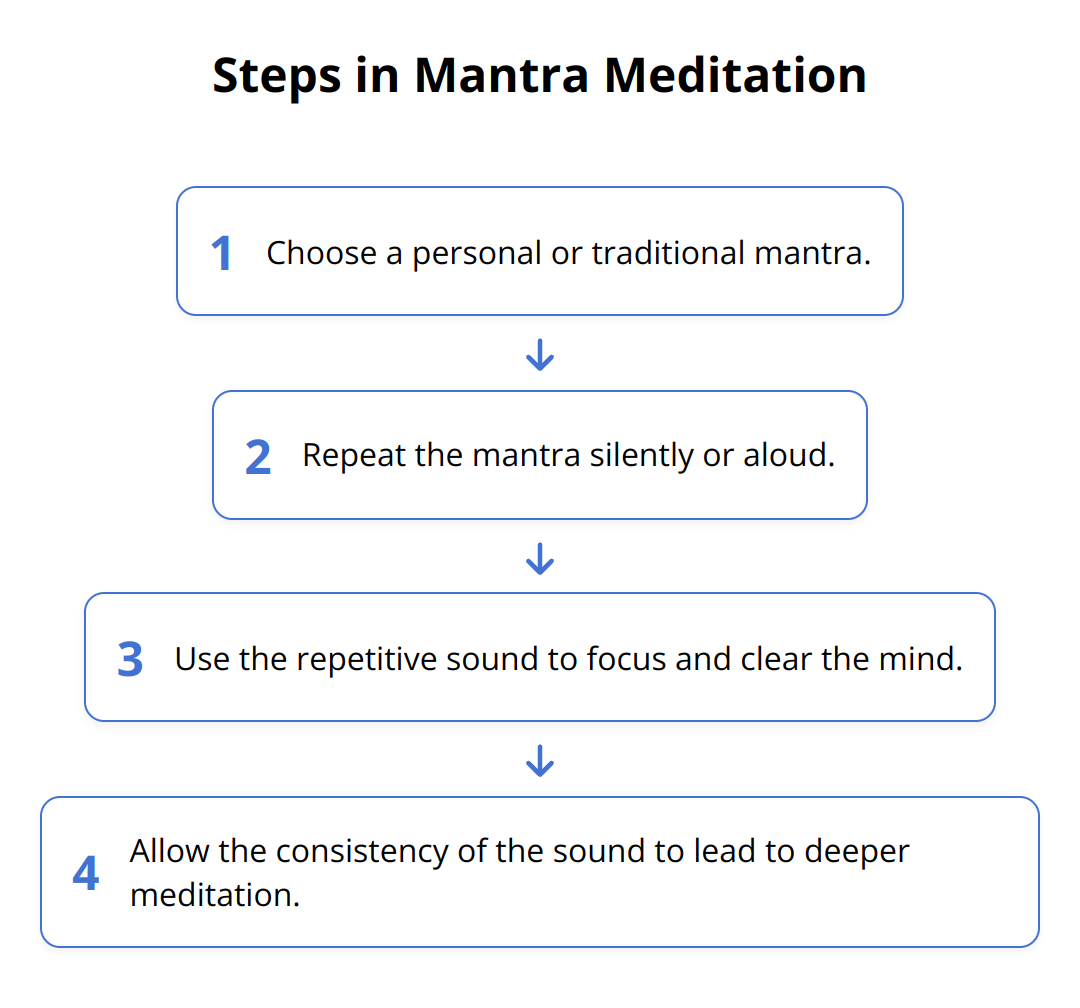
Mantra meditation involves repeating a word or phrase, either silently or aloud, to focus the mind and enter a deeper state of meditation. The repetition of a mantra can be incredibly soothing and can help to clear the mind of extraneous thoughts, facilitating deeper focus and relaxation. Choosing a mantra can be personal or traditional, such as the widely used “Om.” The key is consistency and allowing the repetitive sound to anchor your mind, providing a path to tranquility and reducing stress.
Guided Meditation: Using Visualization for Relaxation
Guided meditation offers a different experience, where a narrator leads you through a scenario or visualization to relax and focus your mind. These can be particularly beneficial for those new to meditation, as the guidance provides structure and focus, helping to combat common challenges like a wandering mind. From picturing a serene beach to imagining yourself succeeding at personal goals, guided meditations can be powerful tools for stress relief and positive visualization. Utilize resources such as Yoga for Stress Relief to find guided sessions that incorporate physical movement for an enhanced relaxation experience.
Practical Tips:
-
Begin with short, daily sessions and gradually increase time.
-
Experiment with different techniques to find what suits you best.
-
Remember, consistency is key to experiencing the full benefits.
By exploring these meditation techniques, you can discover the best approach to foster mental clarity, reduce stress, and enhance your overall well-being. Each method has the potential to serve as a powerful tool in your wellness arsenal, offering paths to a more focused, relaxed, and balanced state of mind.
Making Meditation Work for You
Incorporating meditation into your life is a straightforward process that can yield significant benefits for both your mental and physical well-being. To start reaping the benefits of meditation, you need to approach it with a clear strategy. Here are practical steps to embed meditation seamlessly into your daily routine.
Creating a Dedicated Space
Having a dedicated space for meditation can significantly enhance your practice. This doesn’t mean you need a lavish room; a quiet corner in your home where you won’t be disturbed is perfect. The key is consistency and the psychological association your mind will make between this space and the state of calmness. Equip your space with comfortable cushions or a mat, and perhaps add elements that induce tranquility, such as plants, candles, or soothing artwork. The goal is to make this space inviting and conducive to relaxation and focus.
Establishing a Consistent Routine
Consistency is the backbone of any successful meditation practice. It’s more beneficial to meditate for a few minutes daily than to have a long session occasionally. Schedule your meditation sessions like you would any important appointment, choosing a time of day that aligns with your natural rhythms. Morning meditations can set a positive tone for the day, while evening sessions might help in winding down and improving sleep quality. Stick to your schedule, and soon meditation will become an indispensable part of your daily routine.
Starting Small: Tips for Beginners
For those new to meditation, the prospect of starting can be daunting. However, beginning your meditation journey is simpler than it seems:
-
Start with Just a Few Minutes: Commit to meditating for just two to five minutes per day at first. Once this feels comfortable, you can gradually extend your sessions.
-
Focus on Your Breath: Concentrate on your breathing as an easy entry point into meditation. Notice the sensation of air flowing in and out of your body, and each time your mind wanders, gently guide it back to your breath. This simple act can be powerfully calming and serves as the core of many meditation practices.
-
Use Guided Meditations: Guided sessions can be especially helpful for beginners. Apps like Headspace offer a variety of guided meditations tailored to different goals and durations, making it easy to find one that fits your needs and lifestyle.
-
Be Gentle with Yourself: Don’t get discouraged if your mind wanders or if you miss a day. Meditation is a practice, and like any skill, it requires patience and perseverance to develop.
By taking these practical steps, you can successfully integrate meditation into your life, unlocking numerous health benefits and a greater sense of peace and well-being. Remember, the journey of meditation is personal and flexible, adapting to your unique needs and schedule. Start small, be consistent, and watch as the transformative power of meditation unveils itself in your life.
Wrapping Up
Meditation is a cornerstone for achieving a balanced and healthy lifestyle. Its benefits, ranging from improved mental clarity and stress reduction to enhanced physical well-being, are well-documented and supported by a growing body of research. We’ve outlined how different practices cater to various needs and preferences, demonstrating that meditation is not a one-size-fits-all activity. Instead, it offers a spectrum of techniques that can be tailored to fit individual lifestyles and wellness goals.
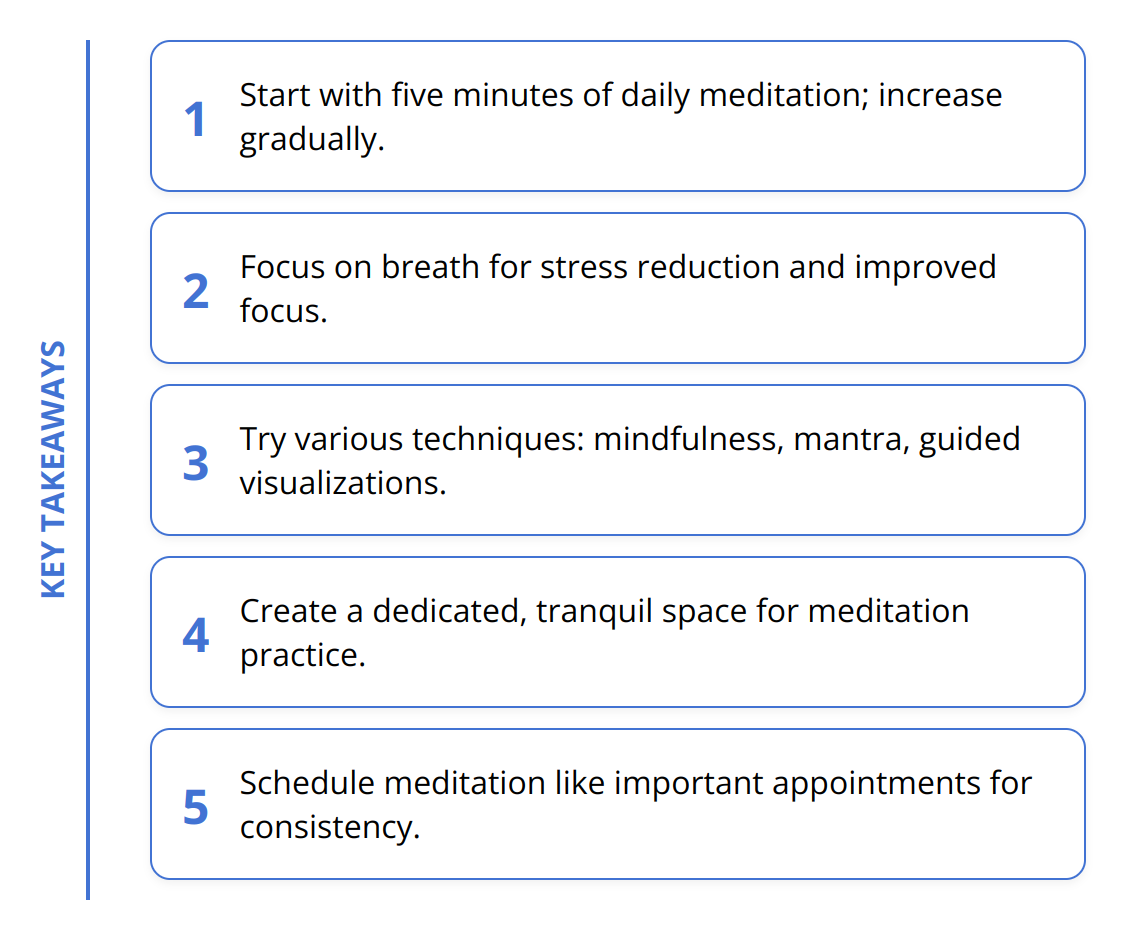
We strongly encourage you to experiment with different meditation techniques. Whether it’s mindfulness to stay present, mantra meditation to focus your thoughts, or guided meditation for structured relaxation, finding the right fit can significantly amplify the benefits you experience. Each method has the potential to bring about profound changes in your stress levels, focus, and overall happiness.
Persistence and patience are essential in this journey. Meditation is a skill, and like any skill, it takes time to develop and incorporate into your daily routine effectively. Starting with just a few minutes each day and gradually increasing the time spent in meditation can make the practice more approachable and sustainable in the long run. Be gentle with yourself and recognize that progress in meditation, as in life, is often non-linear.
At Stimulife Health Blog, we are committed to providing you with a wide selection of the latest health and wellness information. Meditation, a powerful tool for enhancing your well-being, is just one of the many topics we cover. We invite you to explore our blog further for more valuable insights and practical tips to empower your wellness journey. Start exploring today at Stimulife and embark on a path to a healthier, more balanced life. Your body and mind will thank you for it.
Discover more from Stimulife Health Blog
Subscribe to get the latest posts sent to your email.


6 thoughts on “Meditation for Wellness: Essential Guide”